Monday, May 22, 2024

Yamaha Introduces CK76 Stage Keyboard to Expand Its CK Series
The supplied information dates Yamaha’s introduction of the CK76 stage keyboard to October 21, 2026, describing a 76-key addition positioned between the CK series’ 61-key and 88-key models. For distributors, instrument buyers and suppliers serving performance settings, the announcement may warrant a review of product specifications and procurement options. However, the supplied material identifies no accompanying change to policy, standards, certification or trade rules. Its immediate relevance is therefore a product-range development with potential purchasing and documentation implications, rather than evidence of a new regulatory requirement.
A 76-Key Addition Between Existing CK Formats
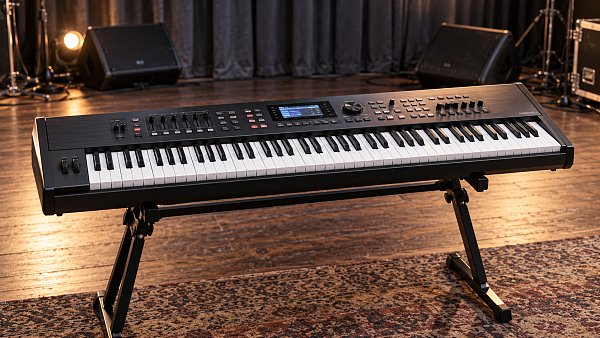
According to the supplied event summary, Yamaha introduced the CK76 as a new member of its CK stage keyboard series. Its 76-key design fills the gap between the series’ 61-key and 88-key models, expanding Yamaha’s digital keyboard offering.
The CK76 includes more than 360 sounds, including samples of Yamaha’s CFX and S700 premium grand pianos. The summary describes the instrument as providing an authentic acoustic piano experience and an intuitive control interface, with the aim of supporting musicians across different performance settings.
Procurement Choices May Change Before Compliance Requirements Do
Dealers may need to distinguish the three keyboard formats
From an industry perspective, the additional key count could give distributors and retailers another option when matching instruments to customer requirements. The potential effect would be on assortment planning, product comparisons and quotation accuracy. Analysis suggests that sales materials should identify the CK76’s confirmed features precisely, while avoiding assumptions that specifications or supporting documents for another CK model automatically apply to it.
Buyers may reassess specification fit
For professional purchasers, the 76-key configuration may justify checking whether existing procurement specifications adequately describe the intended performance use. The supplied information supports a comparison of key count and the stated sound offering, but it does not establish suitability for a particular installation or performance arrangement. Any purchasing recommendation should therefore remain subject to verification of the buyer’s actual requirements.
Trade and service partners face documentation questions
For businesses considering cross-border supply or after-sales support, the announcement may create a need to request model-specific information. The input does not provide certification records, trade classifications, delivery terms or service arrangements. This absence does not establish a compliance problem; it limits what can be concluded from the announcement. Analysis suggests that these matters should be checked before firms make related commitments to customers.
Checks to Complete Before Turning Interest into Orders
Separate confirmed features from purchasing assumptions
As a practical recommendation, buyers and channel partners could record the confirmed 76-key format, the offering of more than 360 sounds, and the inclusion of CFX and S700 grand piano samples in their initial evaluations. Other characteristics relevant to a purchase should remain open verification items where the supplied summary provides no details. This approach would help keep quotations and procurement documents aligned with the available evidence.
Request evidence for any compliance claim
For compliance review, the announcement should be treated as product information. It does not confirm that the CK76 holds any particular certification or satisfies any specific market-access requirement. Where such evidence is relevant to an intended transaction, a reasonable next step would be to request documentation identifying the model and its applicable scope. This is a verification recommendation, not a new obligation established by the launch.
Verify availability before promising delivery
The stated introduction date does not establish order availability, stock levels or delivery schedules. Procurement teams and distributors could therefore seek confirmation of supply timing and commercial terms before making customer commitments. Any effect on purchasing schedules remains a possibility until those details are available.
Keep customer-facing descriptions within the evidence
Analysis suggests that product listings and tender responses should distinguish the supplied description of the piano experience from independently verified performance findings. The summary identifies the included grand piano samples and describes an intuitive interface, but provides no comparative testing. Demonstrations or further technical documentation could help buyers assess suitability without turning descriptive claims into unsupported guarantees.
The Announcement Does Not Establish a Rule Change
As an editorial assessment, the CK76 announcement is best understood as an expansion of product choice. The supplied information offers no basis for describing it as the implementation of a standard, a change in certification practice or a new trade restriction. A product introduction alone cannot establish those conclusions.
What deserves closer attention is whether subsequent official product information clarifies model-specific documentation, availability and support. Any later policy or certification announcement would need to be assessed on its own evidence. Buyer and channel feedback could also help indicate whether the intermediate key count changes purchasing preferences, although the input provides no such feedback.
A New Procurement Option with Its Wider Effects Still Open
On the supplied account, Yamaha’s CK76 broadens the CK series by adding a 76-key instrument with more than 360 sounds and CFX and S700 grand piano samples. From an industry perspective, the practical response is to evaluate that option against purchasing needs and verify supporting information before making commercial commitments. The available material supports a product-range development; regulatory consequences, delivery outcomes and broader market effects remain unconfirmed.
Evidence Behind This CK76 Assessment
This article is based exclusively on the user-provided news title, event date and event summary. No specific official source link was included in the input, so the announcement and its details require continued verification against official Yamaha product information or announcements. No independent confirmation is claimed here.
Further observation should focus on official technical documentation, any applicable certification information, ordering and delivery details, and industry feedback. If later material identifies changes affecting procurement specifications, certification requirements or trade execution, those developments would require a separate assessment.
The Archive Newsletter
Critical industrial intelligence delivered every Tuesday. Peer-reviewed summaries of the week's most impactful logistics and market shifts.