Monday, May 22, 2024

Japan's New Tax-Free Shopping System Requires Airport Checks Before Refunds
From November 1, 2026, Japan's tax-free shopping system shifts the refund process from the point of sale to departure, requiring travelers to pay consumption tax upfront and have goods checked before checking in their baggage. The change matters to retailers, luggage sellers and tourism businesses because it may affect purchasing decisions and the way travelers plan their departure.
Refunds move from stores to departure
Under the new rules, stores no longer provide an immediate tax exemption. Travelers pay the 10% consumption tax when shopping and apply for a refund upon departure using their receipts and goods, through an airport self-service machine or online.
Travelers must have their goods physically inspected by customs before checking in their baggage. The requirement also applies to the departure process for purchases such as luggage and other bulky goods.
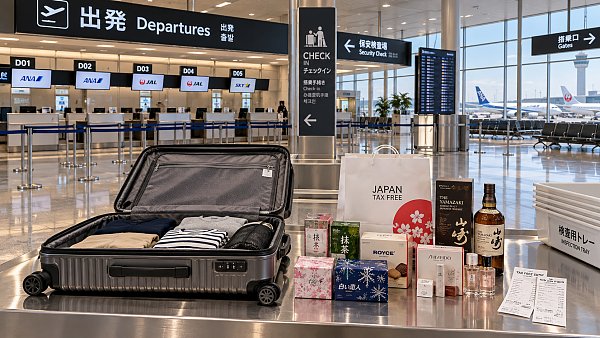
Where the new process may affect sales and travel
Retailers face a different purchase decision
Analysis suggests that the upfront tax payment and later refund step could influence how visitors assess a purchase. Retailers may need to consider how they explain the price paid at checkout, the receipt and the subsequent refund process. The effect on sales remains to be observed.
Bulky purchases add a baggage-planning question
For luggage sellers and other businesses offering large items, the physical inspection requirement may make the sequence of inspection and baggage check-in more relevant to customers. Travelers considering such purchases may factor the departure process into their decisions, although the input does not establish how buying patterns will change.
Tourism services may face more traveler questions
From an industry perspective, tourism businesses that communicate with visitors could encounter questions about receipts, purchased goods and the timing of inspection. Clear information may help travelers prepare, but businesses should verify the applicable procedures before giving detailed guidance.
Preparing for the departure-stage refund
Review checkout communications
Retailers may wish to review how they present the upfront consumption tax and the distinction between paying at purchase and applying for a refund later. Staff guidance could also emphasize keeping receipts and goods available for the departure process, without promising a refund outcome.
Check the sequence for luggage and large goods
Businesses selling bulky items could help customers identify the need for customs inspection before baggage check-in. The input does not specify detailed handling arrangements, so sellers should verify current instructions before advising on logistics.
Monitor practical refund instructions
Businesses may wish to check subsequent official guidance on the self-service and online procedures, documentation and inspection arrangements. The supplied information does not establish further procedural details, so those points require verification rather than assumption.
Implementation details remain important
At this stage, the supplied information describes a rule taking effect on November 1, 2026. Analysis suggests that its practical significance will depend in part on how the refund and inspection steps operate and how travelers and businesses respond. Detailed procedures and market feedback remain points to monitor, not established outcomes.
A new sequence for tax-free purchases
The central change is the move from an immediate store exemption to upfront tax payment followed by a departure-stage refund application and pre-check-in inspection. Businesses can treat the stated change as a basis for reviewing customer communications and operational planning, while verifying details and observing actual execution before drawing conclusions about demand.
Basis for this report
This article is based on the user-provided news title, event date and event summary. No specific official source link was provided in the input; continued verification against official announcements and customs information is needed, including checks on procedural details, implementation and industry feedback.
The Archive Newsletter
Critical industrial intelligence delivered every Tuesday. Peer-reviewed summaries of the week's most impactful logistics and market shifts.