Monday, May 22, 2024

Which User Experience Issues Cause Fitness Equipment Returns?
A return rarely begins with a dramatic equipment failure. More often, it starts with a small disappointment on day one: the treadmill deck feels harsher than expected, the bike saddle becomes painful after ten minutes, the display is difficult to read in a bright room, or assembly takes an entire evening instead of the “quick setup” the buyer imagined.
What user experience issues cause fitness equipment returns? The most common triggers are poor comfort, confusing controls, instability, noise, unreliable performance, difficult assembly, inaccurate expectations, and weak after-sales support. These issues matter because fitness products are used repeatedly and physically. A small design irritation can become a daily reason not to exercise—and then a reason to send the product back.
For manufacturers, suppliers, distributors, and online retailers, return analysis should not be treated only as an operations metric. It is a direct source of product-development insight. The stated reason on a return form may say “not as expected,” but behind that phrase may be a mismatch in biomechanics, onboarding, packaging, product communication, or quality consistency.
Why fitness equipment returns are often experience-driven
Fitness equipment sits at the intersection of engineering and human behavior. A motor may meet its specification, a frame may pass static load testing, and a product may look appealing in product photography. Yet the customer judges it while sweating, tired, short on time, and trying to build a routine. The equipment must feel safe, intuitive, and physically accommodating in a real home, gym, studio, hotel, school, or rehabilitation setting.
This is why technically functional equipment can still generate disappointing return rates. The buyer does not experience “a 2.5 HP motor” or “a reinforced steel frame” in isolation. They experience belt response underfoot, handlebar reach, screen glare, vibration through the floor, and the anxiety of wondering whether a wobble is normal.
For B2B buyers, this distinction is important. A procurement team comparing factory specifications may overlook the same friction points that shape consumer reviews, retailer claims, warranty costs, and repeat purchasing.
1. Ergonomics that do not fit real bodies
Ergonomic discomfort is among the clearest user experience issues causing fitness equipment returns. People vary widely in height, limb proportions, joint mobility, fitness level, body weight, and training goals. Equipment with limited adjustment may work reasonably for a narrow group while feeling unusable to many others.
On an exercise bike, common problems include a saddle that is too hard, a seat that does not adjust far enough forward or backward, pedals positioned awkwardly relative to the rider’s hips, or handlebars that force the wrists and shoulders into an uncomfortable angle. On rowing machines, users may complain about a short rail, poor foot restraint placement, or a handle path that feels unnatural. Strength machines can create similar frustration when seat settings are unclear or the movement path does not align well with the user’s joints.
Treadmills bring a different set of expectations. Runners notice deck firmness, usable belt width, rail placement, step-up height, and whether the walking or running posture feels constrained. A compact treadmill designed for smaller homes may be structurally sound, but a tall user may perceive it as unstable or cramped if the stride space and handrail geometry are poorly communicated.
“Comfort” should therefore not be treated as a vague marketing claim. It needs to be translated into adjustable ranges, body-size guidance, contact-point materials, movement geometry, and practical user testing across a diverse panel.
2. A machine that feels unstable—even when it is safe
Perceived instability is highly damaging because fitness involves momentum. A slight side-to-side movement on a treadmill, a rocking bike during an out-of-saddle session, or a strength bench that shifts on the floor can quickly undermine trust. The customer may stop using the product after one session, even if the unit remains within technical tolerance.
The cause is not always the frame itself. Uneven floors, improperly adjusted leveling feet, loose fasteners after transit, insufficient assembly torque, and packaging damage can all produce a “wobbly” experience. However, buyers do not usually separate installation conditions from product design. They simply conclude that the equipment feels unsafe.
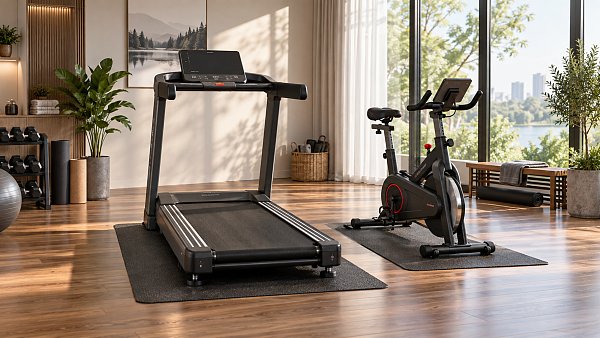
Clear floor requirements, visible leveling instructions, intuitive adjustment points, and a final stability check in the setup guide can prevent avoidable returns. Equipment designers should also consider real residential conditions, including wood flooring, low-pile carpet, rubber mats, and apartments where vibration travels more easily than it does in a commercial gym.
3. Noise, vibration, and the home environment problem
Noise is one of the most underestimated reasons for fitness equipment dissatisfaction. In a showroom or factory test area, ambient sound can hide motor hum, belt contact, fan noise, drivetrain clicking, or frame resonance. At home, those sounds become far more noticeable—especially during early-morning workouts or in shared living spaces.
For treadmills, users may object to impact noise, a belt that rubs or drifts, a motor that changes pitch under load, or a console that rattles. For indoor bikes, resistance systems can produce periodic clicking, rubbing, or squeaking. Compact strength equipment may be returned because plates, pins, pulleys, or folding joints sound harsher than the customer expected.
Noise complaints are also often expectation failures. A phrase such as “quiet operation” may be interpreted as “silent enough for an upstairs apartment,” even when the product only has a quieter drive system than comparable equipment. Retail listings and product manuals should distinguish mechanical operating sound from impact transmitted through the floor. A treadmill can have a quiet motor and still create substantial footfall noise.
4. Controls that interrupt the workout instead of supporting it
Users want to begin moving quickly. If they need to read a long manual to start a basic session, the interface has already created friction. Confusing controls are especially frustrating for older adults, first-time home exercisers, hospitality guests, and users who are not comfortable with apps or connected devices.
Typical pain points include buttons with unclear icons, touchscreens that respond poorly to sweaty fingers, too many modes on the first screen, hard-to-find emergency stop functions, and displays that are difficult to read from a natural exercise position. A console may include impressive training metrics but still fail at the simplest task: allowing the user to start, pause, adjust resistance, or change speed without losing rhythm.
Connected fitness adds another layer of risk. Customers may return a product when Bluetooth pairing is unreliable, a companion app requires repeated logins, software updates interrupt use, or advertised features are unavailable in their region. Smart functions should enhance the core exercise experience, not become a barrier to it. A user must still be able to complete a satisfying workout when Wi-Fi is weak or no subscription is active.
5. Setup expectations that collapse at delivery
Large fitness products arrive with a promise of transformation, but the first encounter can feel more like a logistics project. Heavy cartons, unclear part labeling, missing tools, difficult cable routing, and poorly translated instructions can turn anticipation into regret before the equipment is even used.
Assembly-related returns are not always caused by a defective product. They can result from instructions that assume technical knowledge, diagrams that fail to show orientation, screws packaged without clear identification, or safety warnings placed too late in the process. If two components look nearly identical but fit only one way, the manual should make that difference unmistakable.
Retailers should also be precise about what “assembly required” means. Buyers may assume that a folding walking pad is ready to use, while a full treadmill or multi-station strength machine may require significant time, two people, and clearance around the product. Misleading delivery expectations—such as unclear curbside versus room-of-choice delivery—create another preventable source of dissatisfaction.
6. Performance that feels inconsistent during use
Users are quick to notice inconsistency, even if they cannot identify the underlying technical cause. A treadmill that hesitates during speed changes, an exercise bike with uneven resistance transitions, or a cable machine with a rough pulley feel creates doubt about quality and durability.
Some complaints emerge only under realistic load. A motor may appear stable during a brief unloaded inspection but struggle when a user walks at incline. Resistance calibration may feel acceptable at low settings yet become abrupt at higher levels. Heart-rate readings may fluctuate because of sensor placement, skin contact, movement, or algorithm limitations. When product messaging presents metrics as exact clinical-style measurements, normal variation can be interpreted as malfunction.
Quality control should therefore include use-condition testing rather than relying solely on component checks. Test routines should cover warm-up behavior, prolonged operation, different user weights where appropriate, incline or resistance changes, folding mechanisms, and repeated adjustment cycles. For suppliers, documenting these conditions can support more meaningful conversations with buyers than a basic pass/fail statement.
7. Product claims that create the wrong picture
Many returns are rooted in the gap between the product page and the product in the room. Images may make a compact machine appear larger than it is, or make a full-size unit seem suitable for a small apartment. Terms such as “commercial grade,” “space-saving,” “joint-friendly,” and “beginner-friendly” can be useful, but only when supported by clear context.
A buyer needs to know the assembled footprint, folded dimensions, required clearance, user-height guidance, maximum supported user weight, electrical requirements, training limitations, and whether a mat is advisable. They should also understand the distinction between a machine intended for light home use and one designed for high-frequency commercial environments.
Video demonstrations are particularly valuable when they show realistic use rather than only polished close-ups. A short view of the stride, deck movement, console angle, fold-and-roll process, and actual room scale can prevent the customer from constructing an unrealistic expectation.
What return comments can reveal beyond the stated reason
Return data becomes useful when it is classified beyond generic labels. “Too noisy,” for example, may mean motor noise, impact noise, vibration, an assembly error, packaging damage, or expectations shaped by unclear copy. “Uncomfortable” could refer to saddle pressure, handlebar reach, pedal spacing, deck firmness, or an adjustment range that does not fit the buyer.
Manufacturers and retailers can build a more practical feedback loop by grouping complaints into experience categories:
- Physical fit: reach, seat position, stride room, grip comfort, entry height, and movement alignment.
- Confidence and safety: wobble, unexpected movement, unclear emergency features, and perceived structural weakness.
- Ease of use: assembly, controls, display readability, app connection, and maintenance instructions.
- Environmental compatibility: noise, vibration, storage footprint, power needs, and delivery access.
- Expectation accuracy: differences between marketing claims, product images, stated dimensions, and actual use conditions.
This framework helps separate a one-off defect from a recurring design or communication weakness. It also prevents teams from treating every return as a quality failure when some are really retail-content failures—and vice versa.
How suppliers and retailers can reduce avoidable returns
The strongest approach begins before mass production and continues after sale. Prototype reviews should include people with different body sizes and exercise experience, not only engineers or highly trained athletes. Observe where users hesitate. Ask them to set up the machine without assistance. Watch whether they can adjust the seat, understand the display, and identify safe operating positions.
During product development, pay close attention to contact points and repeated actions: grips, saddles, pedals, adjustment levers, safety locks, folding latches, cup holders, device trays, and transport wheels. These details may look minor in a specification sheet, but they shape the everyday relationship between the person and the machine.
For product listings, clarity is more valuable than excessive feature language. Use accurate dimensions, practical room-planning guidance, readable setup expectations, and honest descriptions of connectivity requirements. Include care guidance for belt alignment, lubrication where relevant, fastener checks, and cleaning. A buyer who understands normal maintenance is less likely to mistake a solvable issue for product failure.
Finally, after-sales teams need enough product knowledge to diagnose experience problems constructively. A helpful response may include a leveling checklist, a belt-alignment guide, a seating-position adjustment, or an explanation of app compatibility. Not every case can be resolved remotely, but thoughtful support can turn a frustrated first impression into a successful product experience.
FAQ: What user experience issues cause fitness equipment returns?
Is discomfort always a sign that the equipment is poorly designed?
Not always. Fitness equipment cannot fit every body perfectly, and some adjustment or adaptation is normal. But recurring complaints about saddle pain, limited reach, awkward posture, or restricted movement usually indicate that the adjustment range, geometry, cushioning, or product guidance needs closer review.
Why do customers return equipment that works mechanically?
Because mechanical function is only one part of the purchase. A machine may operate as intended yet be too loud, difficult to assemble, uncomfortable, intimidating to use, or unsuitable for the buyer’s room and routine. These are still meaningful product-experience failures from the customer’s perspective.
Can better instructions materially reduce returns?
Yes. Clear instructions reduce incorrect assembly, prevent avoidable safety concerns, set realistic delivery and setup expectations, and help users recognize normal operating behavior. Visual step sequences, labeled hardware, troubleshooting guidance, and accessible digital support are particularly useful for complex equipment.
What should buyers ask a fitness equipment supplier before placing an order?
Ask about user-height and weight guidance, adjustment range, noise and vibration considerations, assembly time, packaging protection, quality-control procedures, spare-parts availability, app compatibility, maintenance needs, and the way return reasons are tracked. These questions reveal whether a supplier understands the product beyond its headline specifications.
Reducing fitness equipment returns is ultimately about respecting the moment of use. The customer is not buying a frame, motor, flywheel, or console separately. They are buying a believable path to more movement in their daily life. When the equipment feels comfortable, stable, understandable, and honestly represented, it has a far better chance of staying in the room—and becoming part of a lasting routine.
The Archive Newsletter
Critical industrial intelligence delivered every Tuesday. Peer-reviewed summaries of the week's most impactful logistics and market shifts.